Science cluster & challenges


Summary
The FAIR Memories project aims to enhance the long-term value and reusability of analogue oral history archives through a reusable workflow for digitisation and FAIR-ification. It builds on a historically significant but underused corpus of interviews on consumer culture in early 20th century Italy - materials that were laboriously collected, partially exploited, and then gradually consigned to obscurity. By transforming this legacy corpus into FAIR-compliant digital assets, the project demonstrates how past research efforts can be ethically integrated into the European Open Science ecosystem and made openly available for future inquiry.
Challenge
The oral history collection, provided by Professor Stephen Gundle from the University of Warwick and produced in the 1990s as part of the project Cultural Industries, Governments and the Public in Italy, 1938–1954, comprises 117 interviews recorded on audiocassettes and over 4,000 pages of transcriptions. Although it represents the most extensive oral history archive on Italian mass culture, it remains largely inaccessible and at risk of loss. To address this issue, FAIR Memories proposes the development of a FAIR-ification workflow, and example dataset, showcasing a practical model for digitising legacy humanities materials and bringing them into line with modern standards of openness, ethics, and Interoperability.
Solution
The project responds to a growing need in the social sciences and humanities for coherent, ethical, and standards-based approaches to oral history preservation . The workflow will be designed for adaptation by researchers, archives, and cultural institutions working with legacy or sensitive oral history collections and will integrate established Open Science models (TEI/XML, DCMI, CMDI, RDF) and tools (OpenAIRE Amnesia, CLARIN’s TranscriptionPortal, INCEpTION) and make use of a curated selection of the corpus, which will be digitized, annotated, anonymised, and semantically enriched, as an example of its application to analog oral history collection.
The workflow and dataset will be documented and published on federated repositories connected to the EOSC such as the University of Bologna’s AMS Historica and the Italian node of CLARIN, CLARIN-IT, as well as made available via the SSHOC Marketplace. Additional dissemination will be ensured via the creation of a web interface for the dataset, acting as a showcase for how analog oral history media can be opened up to the wider public.
Scientific Impact
FAIR Memories promotes the responsible reuse of publicly funded research outputs by extending the scientific lifespan of analogue data. The proposed dataset also supports interdisciplinary research on media, memory, linguistics, and oral narration in 20th-century Europe. More broadly, it promotes the importance of oral sources, as not only scholarly resources but part of Europe’s shared cultural memory - and as such, deserving to be preserved, made accessible, and used for the collective benefit of research and society.
Principal investigator
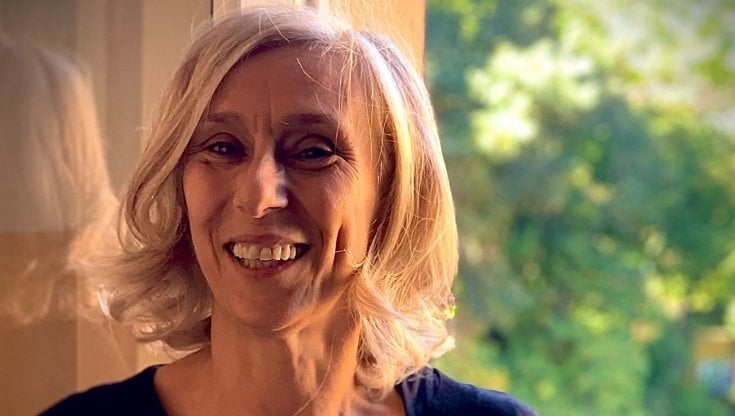
Full Professor at the University of Bologna, Giuliana Benvenuti conducts research in contemporary Italian literature, with a particular focus on literary production within the cultural dynamics of the second half of the 20th century. Her current work explores the relationships between literature and other media in shaping transnational imaginaries. Her scholarly interests also encompass cultural heritage and memory, which underpin and inform her institutional roles. She serves as the Rector’s Delegate for Cultural Heritage and as President of the University Museum System.