Competences and training are essential to the success of the European Open Science Cloud (EOSC). Without the right skills, coordination mechanisms and sustainable training resources and structures, the benefits of EOSC for researchers, service providers and institutions cannot be fully realised.
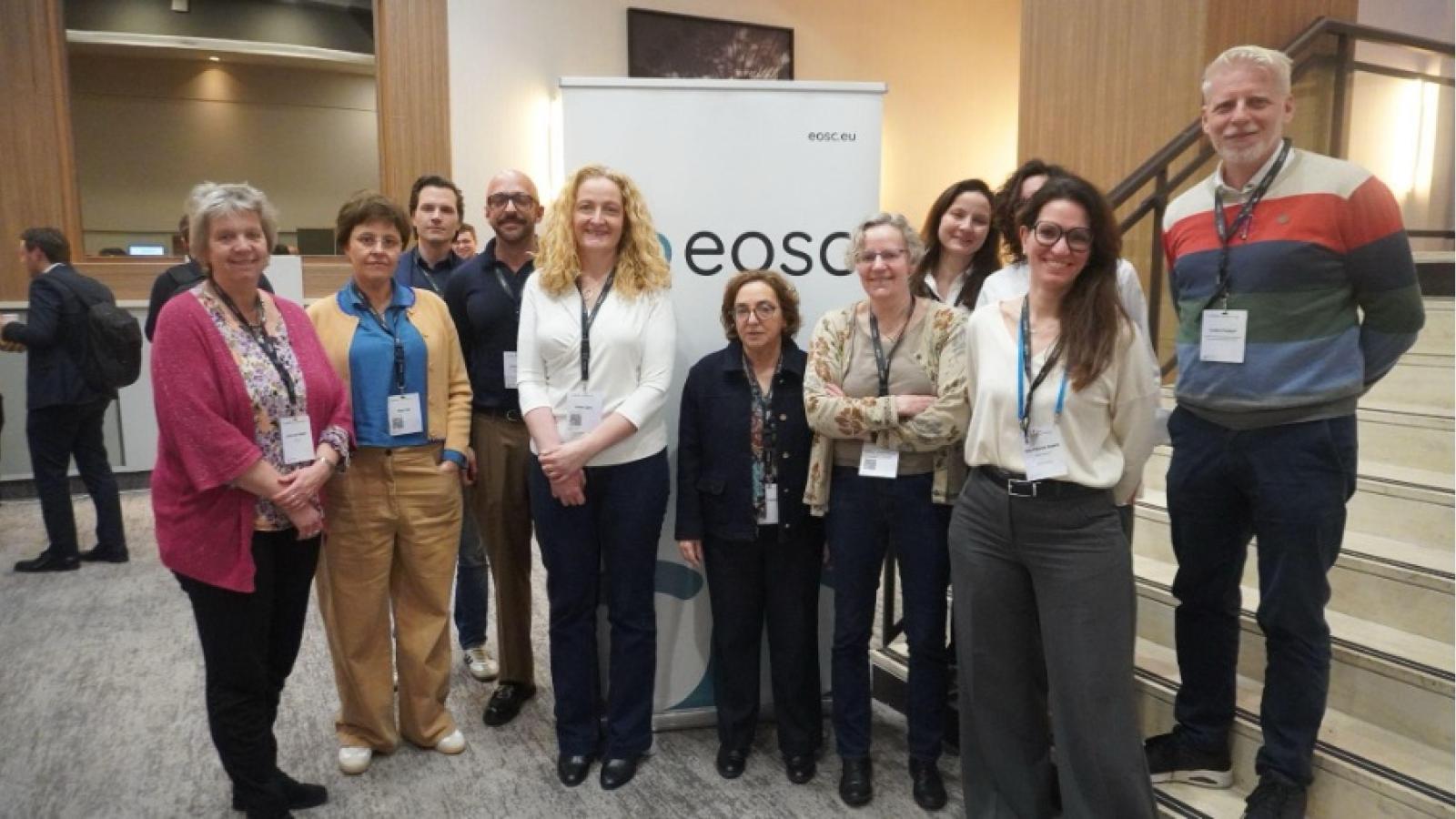
This challenge was at the heart of the Track 3 session on Competences and Training at the EOSC Winter School 2026. The session brought together around 40 participants from across the EOSC ecosystem, including EOSC Nodes, competence centres, research infrastructures, projects, training providers and EOSC policy developers.
OSCARS project manager, Friederike Schmidt-Tremmel, had an active role in the session, and contributed by preparing and co-chairing the sub-session B on the role of Competence Centres together with Emma Lazeri (CNR) and Sara Di Giorgio (GARR).
Setting the scene: Why competences and training matter
The introductory plenary highlighted that EOSC is not only a technical federation, but a system of people, organisations and infrastructures. Thematic Track 3 focused on how skills development, training provision and competence centres can be better aligned with the evolving EOSC Federation. Key challenges identified include a fragmented training landscape, a shortage of skilled research data professionals, and the need for clearer guidance and support for organisations building or joining EOSC Nodes, but also for researchers and service providers using or onboarding services.
The track 3 objectives were threefold:
- To clarify the role of the EOSC Academy in supporting the Federation, as well as define its shape, design and delivery, while sharing lessons learned from the the first wave of EOSC Nodes;
- To explore the contribution of Competence Centres in exploring how Open Science training can enhance the uptake of Nodes resources, clarify synergies between CCs, EOSC Nodes and other training providers, and explore options to improve training material discovery for example via sustainable, federated catalogues;
- To move towards a shared roadmap for EOSC skills and training, consolidating previous recommendations, identifying and prioritising next steps for different stakeholder groups, and creating a draft mandate for a new Working Group on Competences and Training in the EOSC Federation.
Discussions built on existing recommendations from the 2021 EC report “Digital skills for FAIR and open science”, and those provided by the Opportunity Area 5 Expert Group - OA5EG at the 2024 and 2025 editions of the EOSC Winter Schools.
Session A: The role of the EOSC Academy
The first session focused on the EOSC Academy - part of the EOSC Gravity project and tasked to develop training material for existing and future EOSC Nodes and service providers - as a key enabler for the EOSC Federation. Contributions from national, thematic and EU Nodes highlighted common challenges, such as, among others, limited IT and operational capacity, complex service and data onboarding processes, fragmented training materials and the need for sustained user engagement.
Participants agreed that the EOSC Academy should:
- Build a shared understanding of EOSC and the Federation model;
- Support existing and candidate Nodes and service providers through targeted, role-based training;
- Curate and aggregate (tailored) training resources, including best practices, use cases and success stories, lessons learned, as well as legal templates, licensing models, guidelines and material explaining EOSC and the Federation - complemented by webinars, mentoring and peer-to-peer learning;
- Develop clearer onboarding pathways and roadmaps, including legal, technical and policy guidance according to the needs of the different EOSC Federation stakeholders.
Next steps include a structured needs assessment with stakeholders, closer liaison with the EOSC Federation Training Working Group, and the creation of a dedicated online space to access EOSC Academy resources with relevant training material.
Session B1: Competence centres as hubs for skills and engagement
The second session, which was co-chaired by OSCARS project manager, Friederike Schmidt-Tremmel, aimed to explore how training, engagement, and competence-building can be embedded within the EOSC Federation by connecting Nodes, Competence Centres and other training providers with end-users to ensure that Open Science training enhances the uptake of the resources offered by the EOSC Nodes. In particular, it examined the role of competence centres (CCs), drawing on examples from thematic and national initiatives.
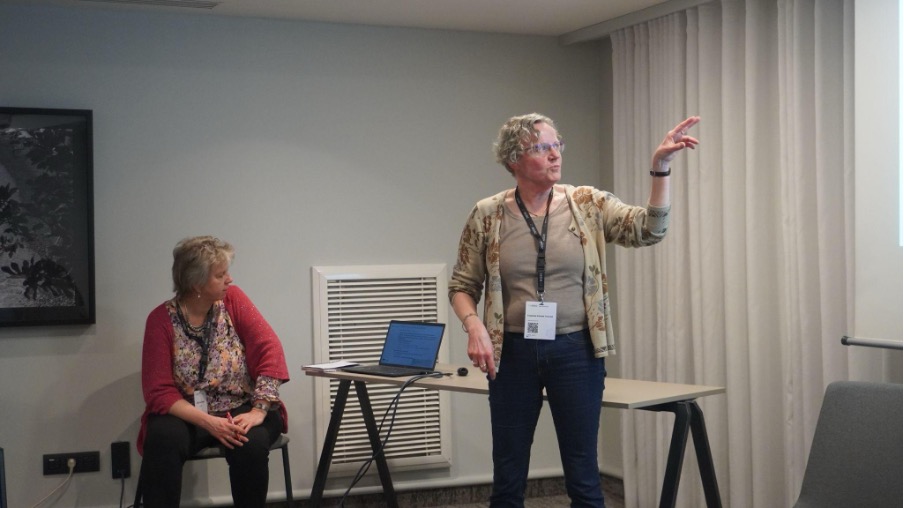
A key message was that while the EOSC Academy primarily serves Nodes, competence centres are closer to end users, acting as trusted hubs that translate EOSC concepts into domain- and community-specific practice.
Discussions highlighted that
- Competence centres help identify user needs and route questions to the right expertise.
- Domain-specific CCs are essential to support specialised research communities.
- Roles such as data stewards, trainers, community managers and quality managers are critical but often under-recognised, while the role of skills&competence manager should be added to the list of EOSC node roles in the EOSC Federation Handbook.
- Science communicators are key to building bridges between communities and roles.
- Every EOSC Node should include a competence centre function, alongside IT infrastructure and services, offering skills for Open Science, for using the Nodes’ tools and services.
- It is important that CCs not formally linked to Nodes are still connected to the Federation.
Participants stressed that competence centres are not helpdesks, but strategic enablers of skills development, including emerging areas such as AI.
Session B2: Training material discovery and catalogues
The third thematic discussion addressed the discoverability and sustainability of training materials. Participants agreed that one single catalogue is neither realistic nor desirable. Instead, EOSC should support multiple training catalogues, with a flexible system depending on target communities, but connected through common approaches and standards.
Key principles identified include:
- Treating training materials like research data, following FAIR-by-design principles;
- Defining a minimal metadata set, versioning practices and quality indicators;
- Supporting learning pathways tailored to communities or tasks;
- The proposed next steps are to develop and test a model for training catalogues in consultation with Nodes and relevant advisory groups, and integrate guidance competencies and skills requirements of nodes into the EOSC Federation Handbook.
Session C: Towards a Working Group on Competences and Training
The final session focused on developing a draft mandate for a new Working Group on Competences and Training under the EOSC Federation structure. There was broad interest from Nodes to contribute, with the understanding that the group would support EOSC’s transition from prototype to production in 2026.
Proposed objectives and outputs include:
- Improving integration of skills and training across the Federation;
- Defining competencies and training requirements for Nodes and services in the EOSC Handbook;
- Developing and supporting the uptake of a minimal metadata schema for training events and materials;
- Piloting metadata exchange with the EOSC EU Node catalogue.
Conclusions
Track 3 confirmed a strong consensus that competences and training are strategic assets for EOSC. The Winter School provided a shared understanding of roles, clarified priorities, and laid the groundwork for more coordinated action through the EOSC Academy, the further development of Competence Centres and a dedicated Working Group. The outcomes mark a concrete step towards a more coherent, sustainable and user-centred EOSC skills and training ecosystem.