HOMEROS - Harmonising Observations from Multi-hazard Environments in Research for Open Science
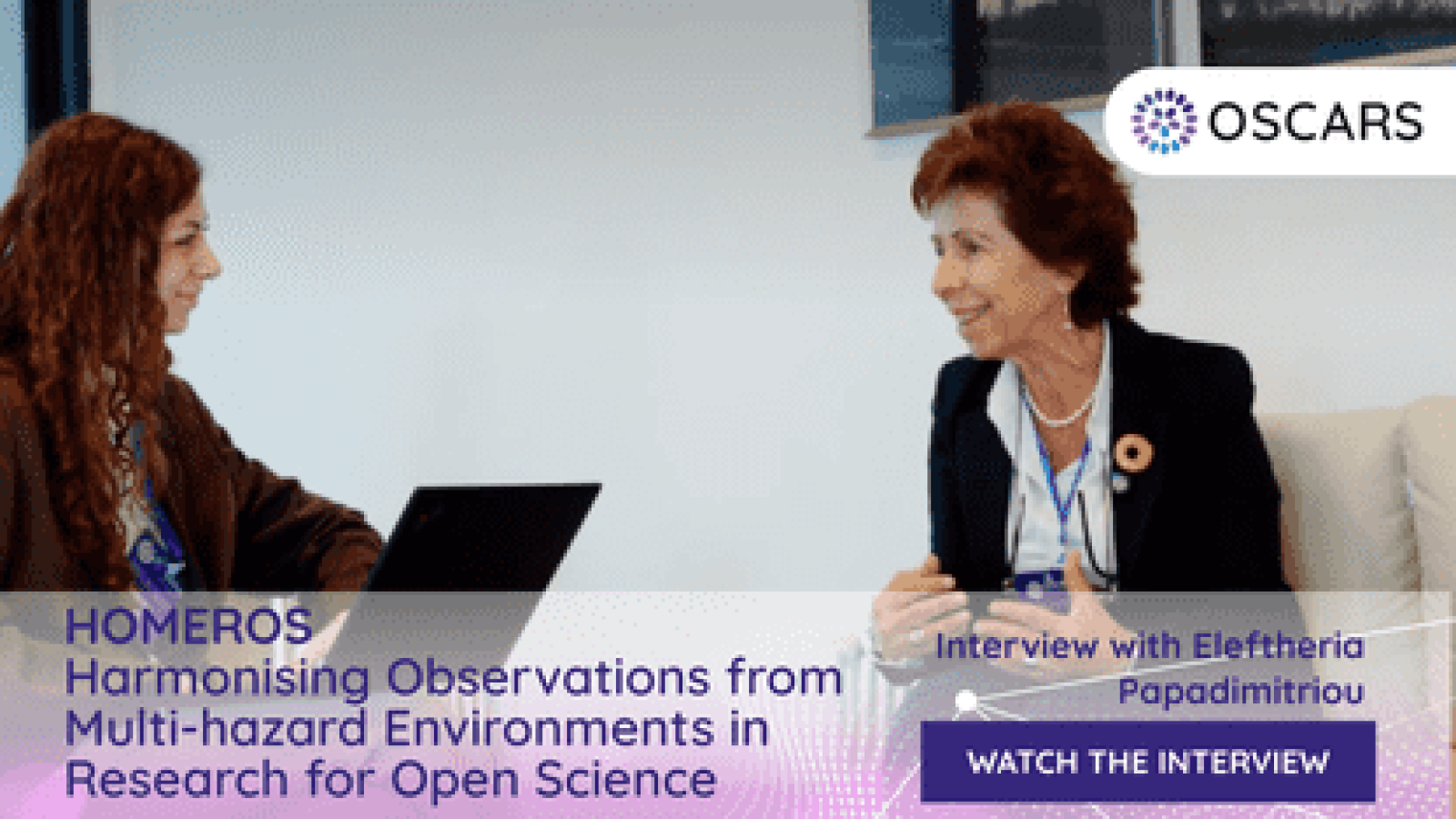
At the 2nd OSCARS Annual General Meeting (AGM), we spoke with Eleftheria Papadimitriou, Principal Investigator of HOMEROS at the Aristotle University of Thessaloniki, to explore the vision and methodology behind this vital project, supported by the OSCARS programme.
Understanding interconnected natural hazards such as earthquakes, landslides, and floods requires more than just data. It requires harmonisation. Yet, the data we use to study these events is often fragmented across institutions, disciplines, and formats. Scattered observations remain one of the biggest obstacles to effective multi-hazard assessment.
This is precisely the Open Science challenge that HOMEROS sets out to address. Focusing on high-risk areas in Greece, the project harmonises diverse seismological, geodetic, and geological data into FAIR-compliant, cloud-based workflows. By turning isolated observations into shared, reproducible research, HOMEROS strengthens multi-hazard assessments—vital for better predicting and mitigating seismic, flood, and landslide risks.
Concrete outputs are already available: permanent GNSS stations have been installed in Lefkada and Kefalonia, open datasets and workflows are shared via a dedicated Zenodo repository, and cloud-based seismological workflows have been demonstrated on the EOSC EU Node.