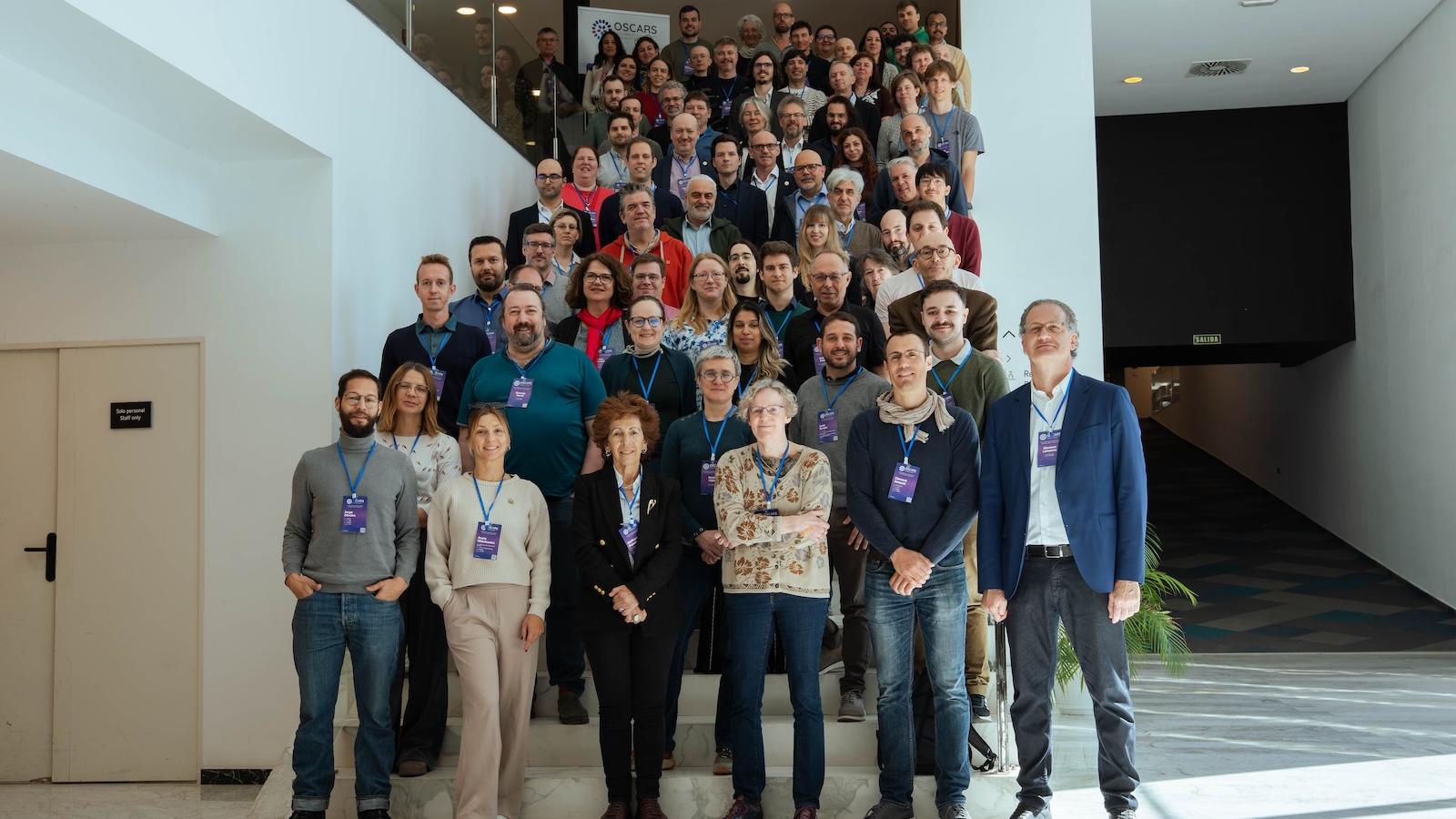
Seventy projects. Five Science Clusters. Three days of flash talks, poster sessions, live mapping exercises and World Café workshops. At the 2nd OSCARS Annual General Meeting, our community didn't just present results - it worked together on what comes next.
Seville, Spain - March 10–12, 2026. Representatives of the 70 OSCARS-funded Open Science projects gathered in Seville with the members of the OSCARS Consortium and of the five Science Clusters - ENVRI, ESCAPE, LS-RI, PaNOSC and SSHOC - to present the results achieved after the first year of implementation - and the evidence is compelling. Funded through OSCARS' cascading grant mechanism and spanning every major scientific domain, these projects demonstrate that making research data Findable, Accessible, Interoperable and Reusable, FAIR - is not an administrative exercise but a direct enabler of scientific discovery, cross-disciplinary collaboration, and measurable societal benefit.
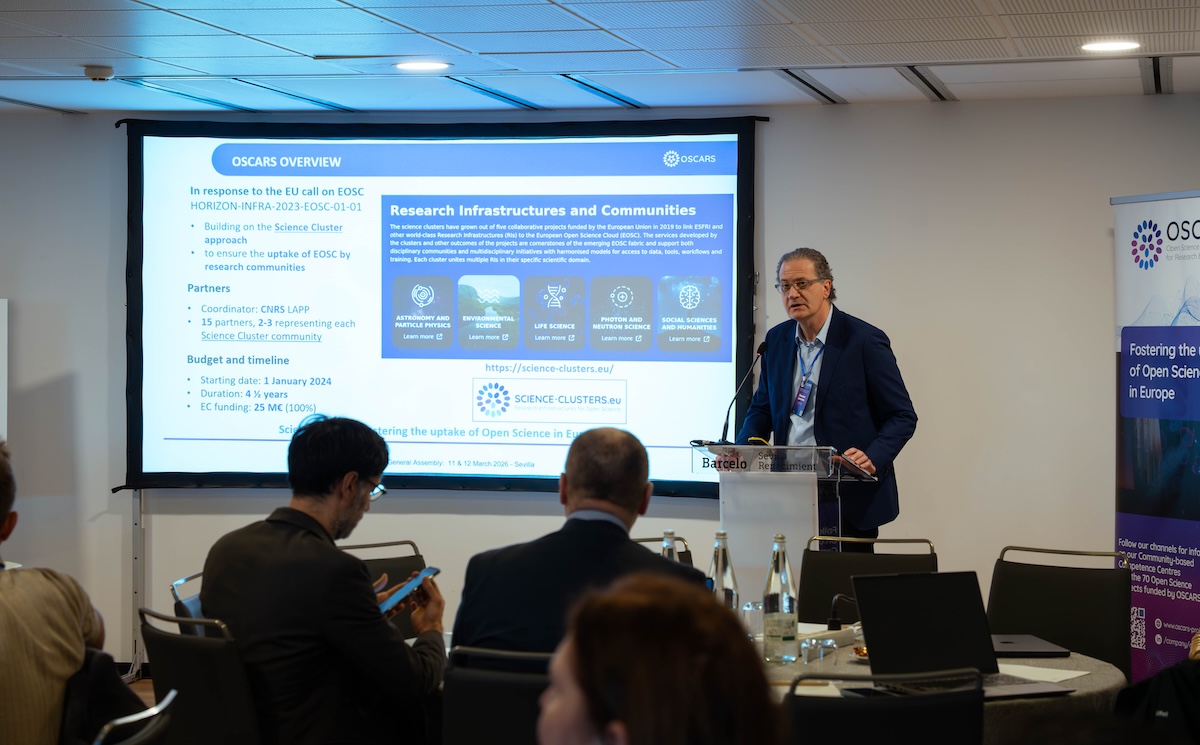
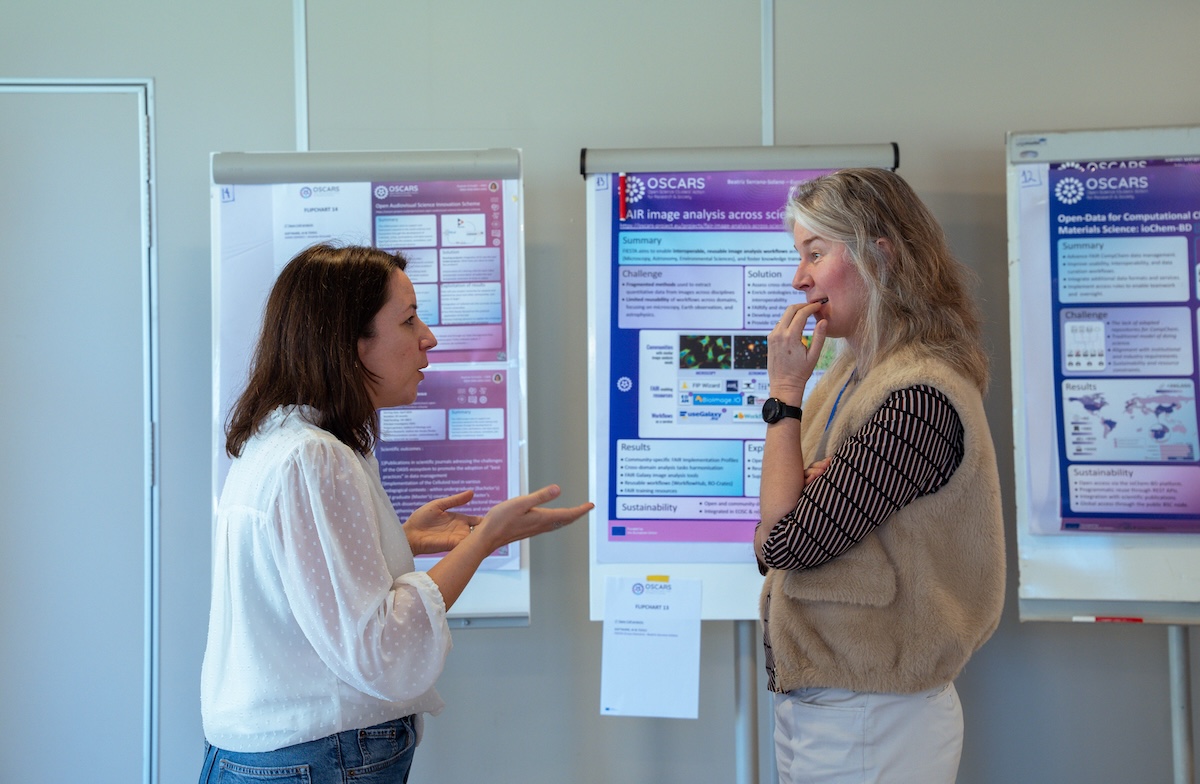
The meeting was deliberately designed as a working session: project flash talks, poster sessions, collective mapping of all 70 projects onto the research data lifecycle using digital and analogue tools, and World Café tables where participants co-developed solutions to shared challenges - reflecting OSCARS' core belief that Open Science is built together, not handed down.
As stated by OSCARS project manager, Friederike Schmidt-Tremmel, “the idea was to get the community together, as we learnt that for our funded projects it is extremely useful and very often eye opening to meet people from other projects from across all scientific disciplines, realising that there are many people in other disciplines dealing with the same problems”.
The results: what OSCARS funded projects have already achieved
The first Open Call funded 58 projects. Most are now past the halfway point of their implementation. What they have produced in that time spans every major scientific domain.
From the deepest image of the radio universe to tools that help city planners manage flood risk, or clinicians share patient data safely for AI research — our funded projects are showing that Open Science is not a reporting requirement. It is how frontier research gets done.
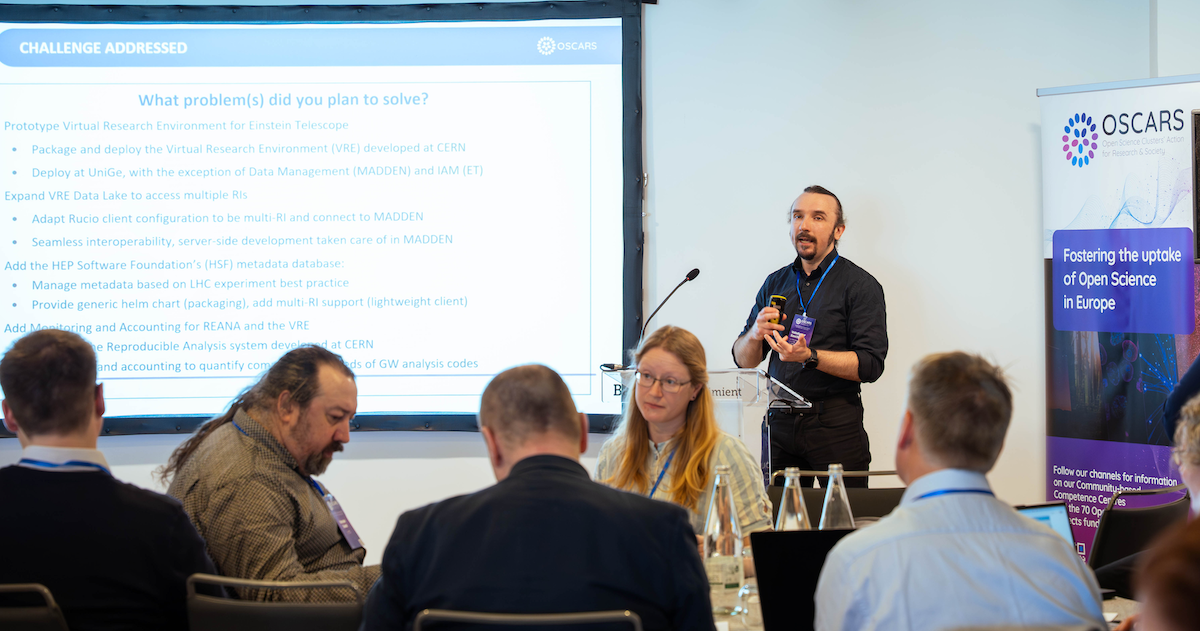
In astrophysics, COPLI (ESCAPE) has produced the deepest radio image of the universe to date — not just as a scientific achievement, but as a demonstration that a fully open, reproducible pipeline running on heterogeneous HPC systems can deliver frontier results. GASPS (ESCAPE) computed spectral energy distributions for all 1.8 billion stars in the Gaia catalogue, deriving physical parameters for 237 million of them — the largest internally coherent stellar parameter catalogue ever assembled. MADDEN and ETAP (both ESCAPE) are building the open data infrastructure and analysis portal for the Einstein Telescope, ensuring that when Europe's next-generation gravitational- wave observatory begins operations, its data will be immediately open and reusable.
In the life sciences and environmental research, FAIRFUN4Biodiversity (ENVRI) annotated 24 million genes across nearly 1,000 non-model organisms — a scale that was simply not achievable without FAIR-by-design AI tooling. LabID-PROV (LS-RI) FAIR-documented over 18,000 confocal microscopy images of marine plankton collected during the EMBL TREC pan-European coastline expedition, making an entire field-to-archive data lifecycle openly reusable for the first time. EVA-FAIR (ENVRI) achieved something that takes years of community work to reach: 100% of national data providers across the European Vegetation Archive committed to publishing their data under open FAIR conditions.
In the social sciences and humanities, ParlaCAP (SSHOC) has enriched 8 million parliamentary speeches with topic and sentiment classification — creating an open dataset that comparative political science researchers across Europe are already drawing on. And Opravidlo 2.0 (SSHOC), a free public grammar- correction service processing over 200,000 requests a month, is channeling anonymised linguistic data back into the CLARIN research infrastructure. It is one of the clearest demonstrations in our portfolio that Open Science and citizen science are not separate things.
Across the photon and neutron science domain, PaN-Finder (PaNOSC) has already demonstrated in early user tests that a researcher can locate their own experimental dataset by typing a plain-language question — a deceptively simple result that represents a significant reduction in the friction of data reuse across large-scale European facilities. The Fragalysis Cloud project (PaNOSC, LS-RI) is now formally collaborating with the Protein Data Bank Europe on AI-ready data ingestion standards, bringing OSCARS-funded work directly into the global biomedical research pipeline.
→ Browse all 70 funded projects →
A second wave: twelve new projects joined the community
The second day of the AGM also introduced the twelve projects selected through our second Open Call. They have only just begun their implementation, and Seville was their first opportunity to present their plans to the wider OSCARS community and receive feedback.
Their scope extends the portfolio in directions that the first round did not yet cover: gravitational-wave cosmology and the Hubble tension (UpGLADE, ESCAPE); federated health data analysis across BBMRI, ELIXIR and EIRENE (FLEX4HEALTH, LS-RI); marine species distribution modelling for biodiversity management (FAME, ENVRI); open ecological forecasting (PREDICT, ENVRI/SSHOC); and open GeoAI for urban flood risk management integrated with Copernicus Emergency Management Services (FLOODWISE, ENVRI).
The threefold increase in applications between our two Open Calls signals a structural demand that goes well beyond OSCARS. The European Commission has recognised this: through the new INFRAEOSC 2026 call — "Enabling an operational, open and FAIR EOSC ecosystem" — it is investing €50 million to further advance FAIR data uptake and EOSC integration across research communities and infrastructures, building on the foundations that projects such as ours have helped lay.
→ Learn about the 2nd Open Call and selected projects →
What the World Cafés told us
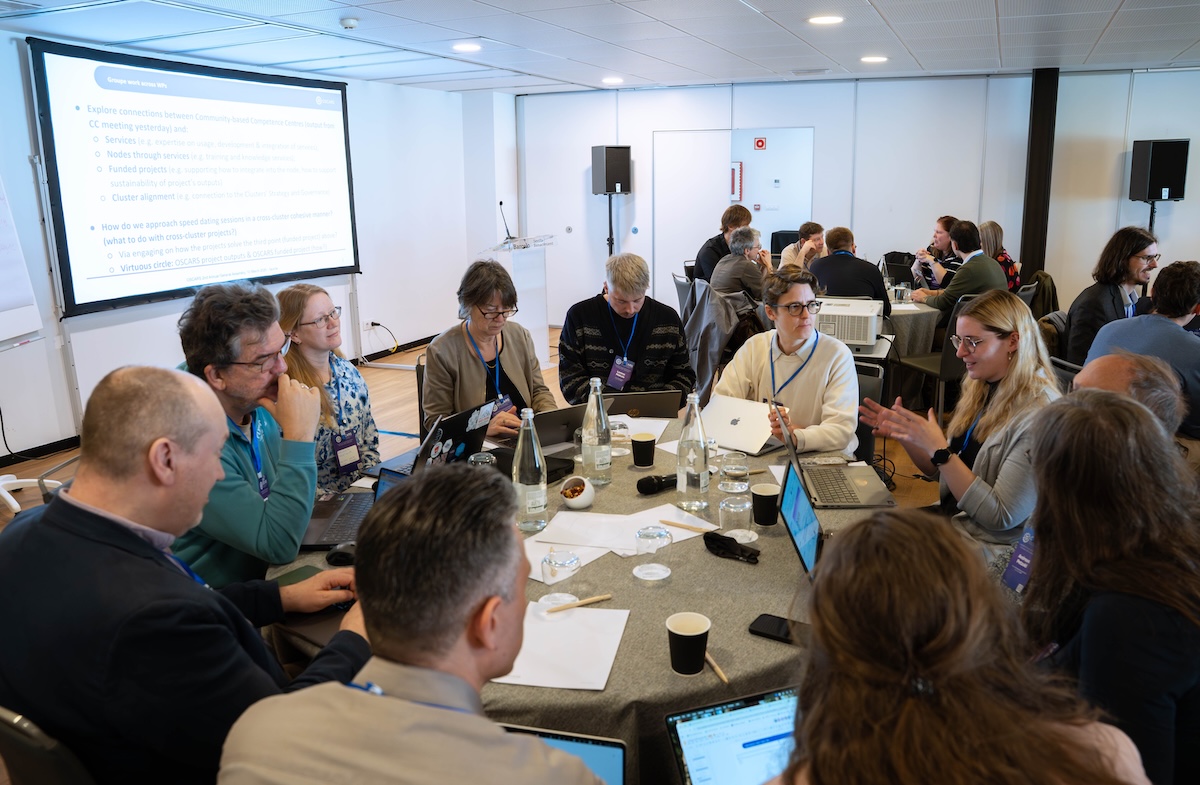
Three extended working sessions — structured as World Cafés with rotating tables and mixed groups — produced something more useful than summaries: a shared diagnosis of where the European Open Science ecosystem most needs to improve, written by the people closest to the work.
Three structural challenges were discussed across all tables. The first is metadata harmonisation and interoperability: how to build shared standards that work across domains without erasing the legitimate differences between them. The second is community engagement and incentives: how to make Open Science the default for researchers rather than an additional burden, through better recognition, better tools, and better governance. The third is sustainability and legal complexity: how to ensure that the tools and services OSCARS projects are building can survive and scale beyond individual project lifetimes, navigating data licensing, archiving decisions, and infrastructure costs.
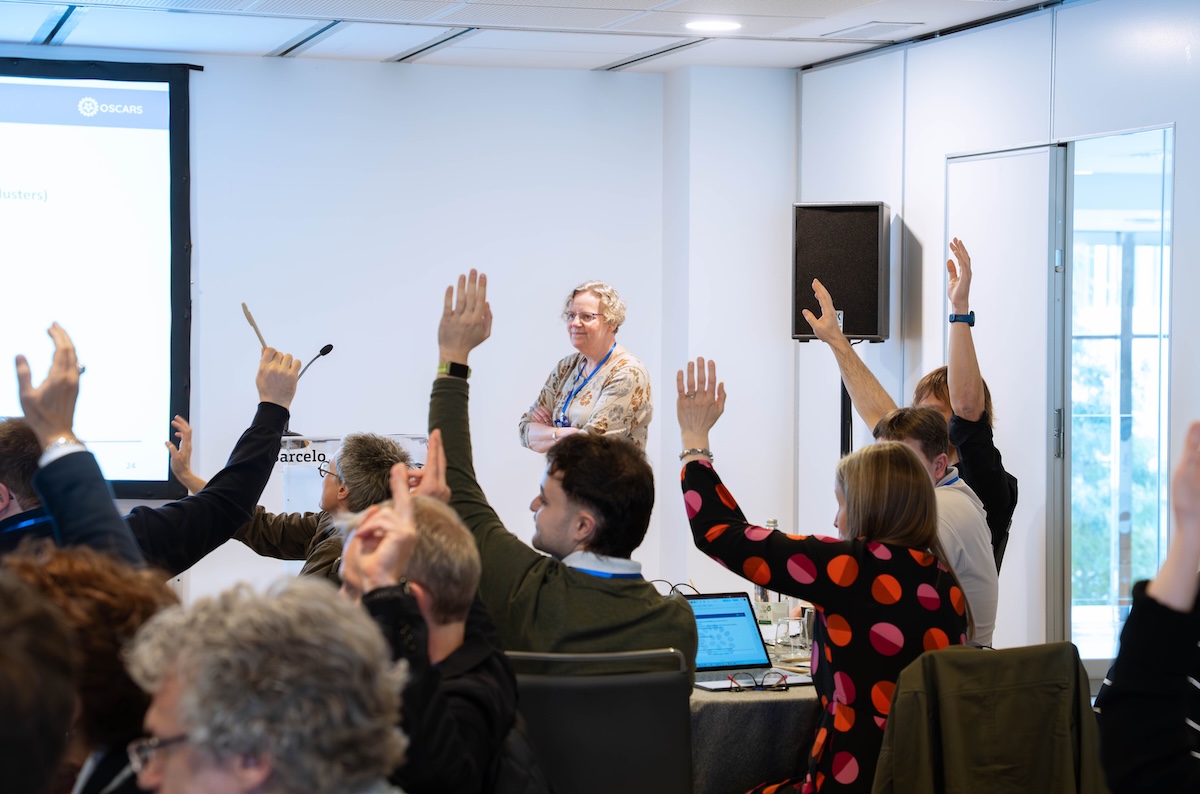 The recommendations that came out of these sessions are concrete. Participants called for more data stewards embedded directly in research teams; for standards to be integrated into tools rather than imposed on top of existing workflows; and for the Community-based Competence Centres being developed across the five Science Clusters to act as active brokers — connecting researchers to the right services, nodes and expertise — rather than simply as catalogues of resources.
Projects like mTeSS-X (LS-RI, PaNOSC) — whose federated training catalogue is now part of the EOSC Node build-up group's official work programme — and Astro-CC (ESCAPE) — piloting a replicable CCC model for astronomy across all five Science Clusters — are already translating these recommendations into up-and-running infrastructure. The full outputs of the World Café sessions will be published separately and will feed directly into OSCARS Work Package planning for the second half of the project.
→ Learn about OSCARS Community-based Competence Centres →
Why cascading grants work
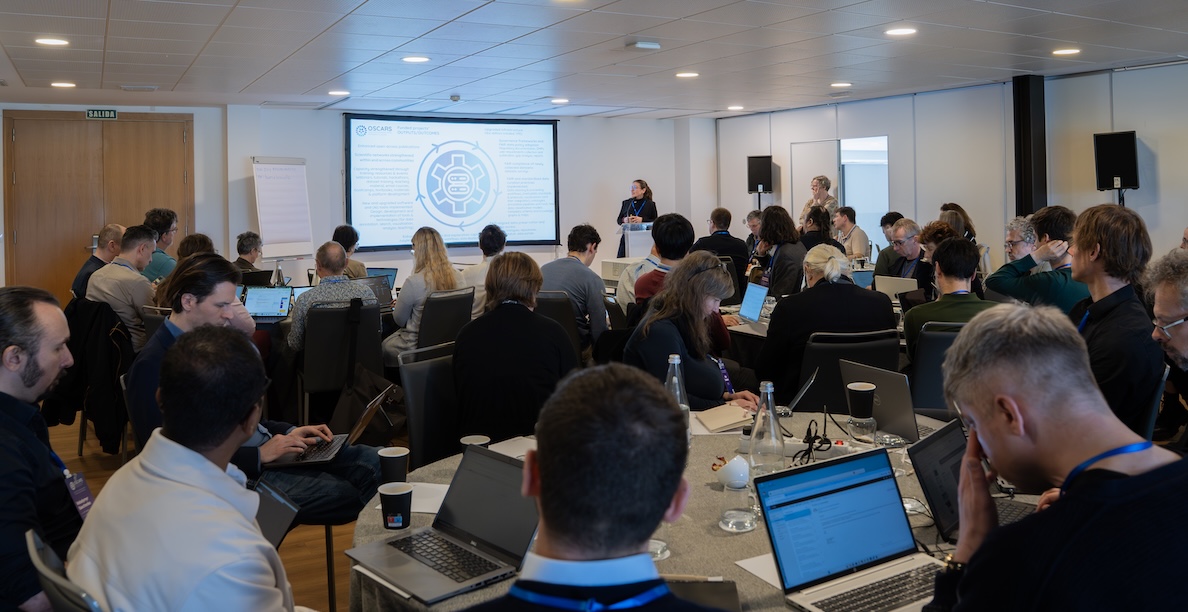
One of the most consistent threads in the feedback from our grantees — gathered through a survey conducted ahead of the AGM — is that cascading grants do things that larger EU programmes cannot easily replicate.
The application process is lean: researchers describe it as "efficient and simple for a significant amount of funding". The deployment is fast: within months of selection, teams are producing outputs. And the ecosystem effect is real: being part of the OSCARS network — connected to five Science Clusters, to EOSC, to a community of 70 peer projects — opens collaborations and increases credibility in ways that an isolated project cannot.
Grantees also point to something less tangible but equally important: the ability to "hire the staff needed to rescue methods that would otherwise be abandoned." Open Science infrastructure is built by people. Cascading grants fund the people who build it.
→ Why apply to OSCARS Open Calls? Insights from our grantees →
What comes next
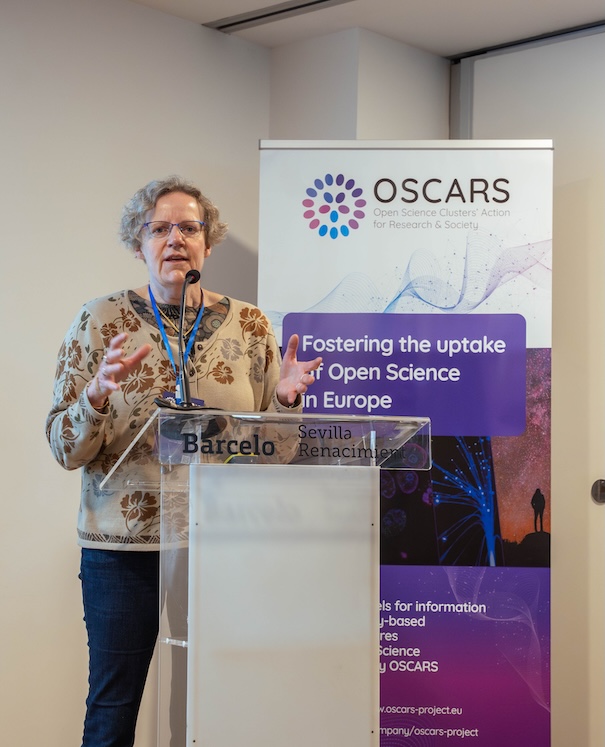
The 2nd AGM was not the end of the reporting cycle. It was the beginning of a working phase. The roadmap produced in Seville - shaped by 70 project representatives, five Science Clusters, and the OSCARS Consortium members - will directly inform the actions of our Community-based Competence Centres, our Work Packages, and our engagement with the EOSC thematic nodes over the coming months.
If you are a researcher who attended, the materials from the flash talks and poster sessions are available on the AGM website on Indico. If you are a policymaker or funder trying to understand what targeted, accessible Open Science funding produces at European scale - the answer is in this community's work, and in the European Commission's decision to carry that momentum forward through the INFRAEOSC 2026 call. And if you are part of the broader Open Science community in Europe: the challenges identified in Seville — on, among others, metadata standards, community incentives, and long-term sustainability — are shared challenges. We would welcome your engagement.
Browse all OSCARS funded projects
2nd AGM programme and materials
Stay up to date: subscribe to the OSCARS newsletter
Author: Nicoletta Carboni, CERIC-ERIC
Photo & video credits: OSCARS project | Anastasija Grinuk, Trust-IT Services